
Best leg exercises guide
How to choose leg exercises by quads, hamstrings, glutes, calves, bilateral and unilateral patterns, machines, fatigue, and progression.
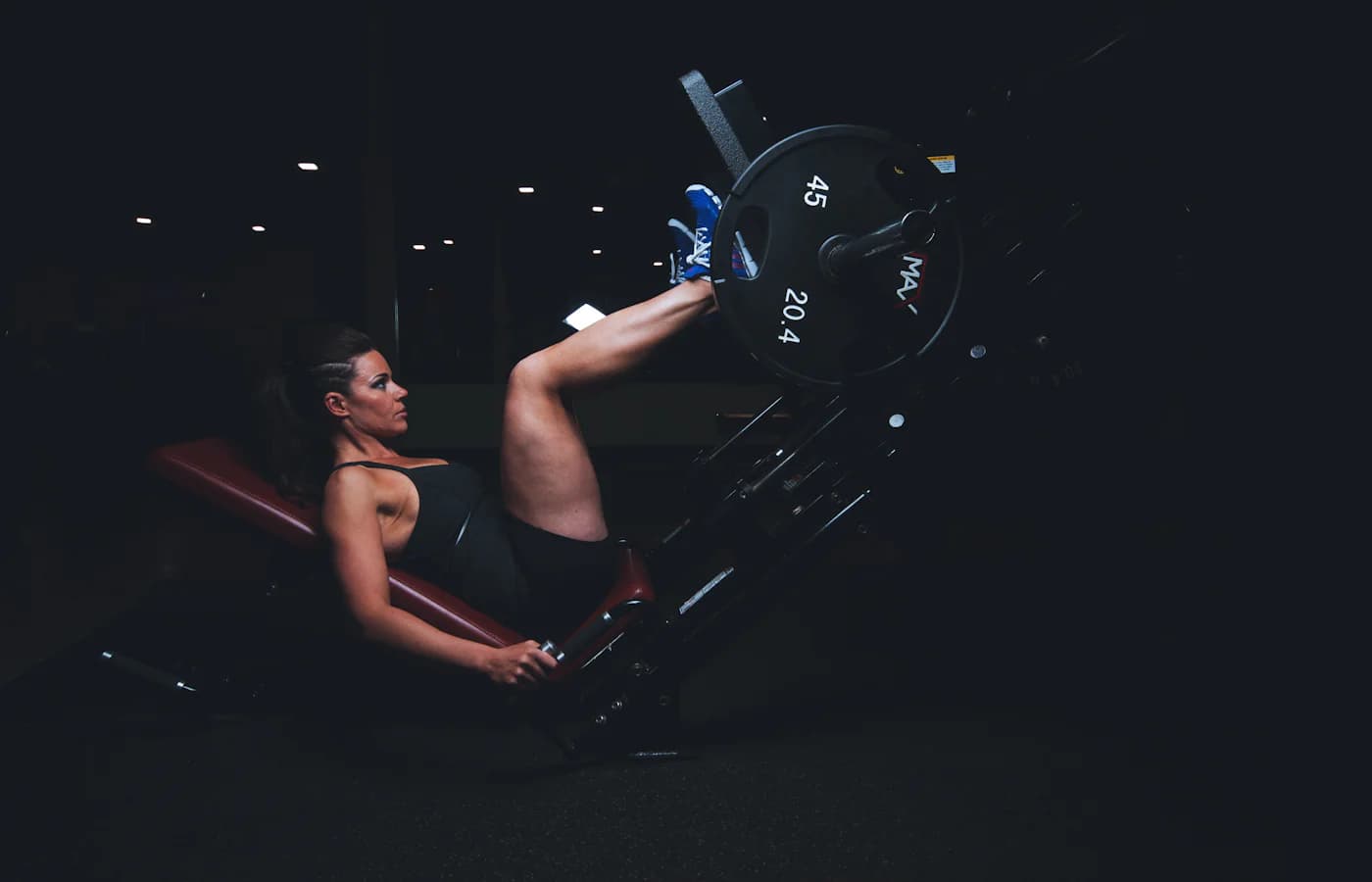
Quick answer
The best leg exercises are the ones that cover the lower-body jobs you actually need: knee-extension work for quads, hip-extension and knee-flexion work for hamstrings and glutes, single-leg or split-stance work when useful, and calf work if lower-leg growth or strength matters.
Build the menu from jobs, not from a heroic lift list: quads usually need knee-dominant work, hamstrings need hinges and/or curls, glutes need hip-extension and deep-hip-flexion work, calves need direct plantarflexion, and machines or support can make the target clearer when balance or bracing steals the set.
For most lifters, a useful leg plan is a menu, not one heroic lift: one squat or leg-press pattern, one hinge or leg-curl pattern, one lunge/split-squat/step-up option if it fits, and calf work when it is a goal.
A practical starting point is 6-10 hard weekly lower-body sets for the main target you want to grow, then adjust by recovery, performance, soreness, and whether the target muscle or some other bottleneck is ending the set.
How to use this guide
- Treat this as an exercise-selection map, not a mandatory ranking.
- Pick movements you can perform with control, progress over weeks, and recover from without every leg day becoming a knee, hip, low-back, or balance survival test.
- Keep the first menu stable for 4-6 weeks. Track the exercise, stance or foot position, range of motion, load, reps, rest, and what limited the set before deciding the exercise failed.
- Score each slot by the limiter you want. A quad slot should usually end because quads are near their clean limit, not because grip, breathing, balance, low-back fatigue, or setup chaos ended the set first.
- Count sets by the job they actually trained. A hard squat, Romanian deadlift, leg curl, hip thrust, lunge, and calf raise can all be lower-body work, but they do not create the same quad, hamstring, glute, calf, or fatigue signal.
- The useful leg exercise framework
- Quads, hamstrings, glutes, and calves
- How to match leg exercises to recovery and equipment
- Common leg-training mistakes
What this does not prove
Short-term physiology, EMG, mechanism, and acute-fatigue evidence can inform choices, but it should not be treated as final proof of long-term results.
- There are not high-quality long-term trials ranking every leg exercise with volume, effort, technique, range of motion, and population perfectly matched.
- Lower-body exercise studies often differ in training status, measurement method, exercise depth, machine setup, and whether volume is equated.
- The quad, hamstring, glute, calf, unilateral, and fatigue-cost labels are coaching categories for planning, not diagnostic labels or validated hypertrophy calculators.
- Exercise choice is highly individual because knee, hip, ankle, low-back, balance, sport, and equipment constraints vary.
Decision checkpoints
- Setup: choose the version you can repeat with stable positions and normal control.
- Progression: use a clear next step for load, reps, range, pace, time, or weekly volume.
- Common mistakes: fix the boring failure points before adding a harder variation.
- Recovery: keep enough margin that the next important session does not get worse.
- Simplify or switch when setup friction, pain, fatigue cost, or stalled progress becomes the main story.
- Simple gym leg menu
- Two-day weekly menu
- Balanced leg day vs quad-priority day
- Quad or glute priority
Who this is for / not for
- Use this as general education and training planning, not as medical care, diagnosis, individualized rehab, sport-return clearance, or a prescription.
- Beginners should keep the rules conservative and repeatable before chasing advanced intensity, volume, or exercise variations.
- Pain, recent injury, pregnancy or postpartum restrictions, cardiac symptoms, fainting, neurological symptoms, medication constraints, kidney disease, eating-disorder history, or clinician-managed weight loss should change the plan with qualified guidance.
Terms used here
- Hypertrophy means an increase in muscle size from repeated training and recovery.
- Progression means making training gradually harder or better matched over time.
What to do
Stop treating legs as one muscle
Quads, hamstrings, glutes, adductors, calves, and smaller stabilizers do different jobs, so no single exercise covers everything perfectly.
A squat can train quads and glutes hard, but it is not the same stimulus as a leg curl, Romanian deadlift, calf raise, or supported single-leg exercise.
- Quad bias: squat variation, leg press, hack squat, split squat, lunge, leg extension.
- Hamstring bias: Romanian deadlift, stiff-leg deadlift, seated leg curl, lying leg curl, Nordic curl progression.
- Glute and single-leg bias: hip thrust, step-up, lunge, Bulgarian split squat, cable pull-through.
- Calf bias: standing calf raise, seated calf raise, leg-press calf raise.
Choose the big pattern first
A squat, hack squat, leg press, or split squat can be the main knee-dominant pattern when it fits your joints, equipment, and progression goal.
A Romanian deadlift, hip hinge, or leg curl can cover posterior-chain work, but the limiting factor matters: lower-back fatigue is not the same thing as a hard hamstring set.
- Quad slot: 2-4 hard sets from a squat, leg press, hack squat, split squat, lunge, or leg extension.
- Hamstring slot: 2-4 hard sets from a Romanian deadlift, stiff-leg deadlift, seated leg curl, lying leg curl, or Nordic curl progression.
- Glute or unilateral slot: 2-4 hard sets from a hip thrust, step-up, lunge, Bulgarian split squat, cable pull-through, or glute-biased leg press.
- Calf slot: 2-4 hard sets from a standing, seated, single-leg, or leg-press calf raise if calves are a real target.
Use machines and support without shame
Machines are not automatically less serious than free weights. A leg press, hack squat, Smith-machine squat, leg extension, or leg curl can be useful when stability lets the target muscle work harder.
Free weights are useful when skill, bracing, balance, and whole-body coordination are part of the goal. The best choice depends on the job of the exercise.
Audit the limiting factor before changing exercises
Before swapping movements, write down what actually ended the set. The fix is different when the target muscle fails, the joint feels irritated, the lower back gets tired, balance breaks down, or conditioning limits breathing.
If the wrong thing ends the set for two similar exposures in a row, simplify the slot before adding volume: use more support, a machine, a shorter exercise list, a smaller load jump, or a movement with a clearer range standard.
- Target muscle limit: keep the exercise and progress slowly.
- Balance limit: add support, slow the setup, or choose a more stable variation.
- Low-back or grip limit: move some work to leg presses, hack squats, leg curls, leg extensions, or supported split squats.
- Joint-symptom limit: reduce range/load or get qualified help when symptoms persist, spread, swell, or feel unstable.
Balance stimulus with fatigue
Heavy squats, deadlifts, lunges, and hinges can be productive, but stacking too many high-fatigue movements can make progression worse instead of better.
If performance drops fast, soreness lingers, knees or hips complain, or lower-back fatigue dominates every set, keep the useful hard work and move some volume to more stable options.
- Progress when two similar exposures hit the target reps with the same setup, range, rest, and control.
- Add 1-2.5 kg on smaller or single-leg movements, 2.5-5 kg on bigger machine or barbell patterns, one rep per set, or one extra set.
- Change one variable at a time: exercise, stance, foot position, range, load, rep target, or weekly set count.
Count lower-body sets by slot, not by vibes
When a plan says "10 leg sets," ask what those sets actually did. Six hard squat or leg-press sets plus four leg curls is not the same lower-body week as ten hinge-heavy sets, even if both totals look tidy in an app.
A useful weekly audit separates quad-biased, hamstring hinge, hamstring curl, glute-biased, unilateral, calf, and high-fatigue trunk-loading work. That keeps you from accidentally adding more of the exercise that already costs the most recovery while neglecting the target that still needs cleaner work.
- Quad-biased set: knee-dominant work where quads are a main limiter.
- Hamstring hinge set: hip-extension work where hamstrings or posterior chain are the intended limiter.
- Hamstring curl set: knee-flexion work that is not replaced by every squat or press.
- Glute-biased set: hip thrust, glute-biased press, split squat, step-up, hinge, or pull-through work where glutes are a main target.
- Calf set: direct plantarflexion work when calves are a real goal.
- Fatigue-cost set: heavy squat, deadlift, lunge, or hinge work that may count against recovery even when it is not the main target.
How it looks in practice
Simple gym leg menu
A practical starting menu could include 3 sets of 6-10 reps on a squat or leg press, 2-3 sets of 8-12 reps on a Romanian deadlift or leg curl, 2 sets of 8-12 reps per side on a split squat or lunge if useful, and 2-4 sets of 8-15 calf raises if calves are a target.
That covers the main lower-body jobs without needing ten different exercises in one session. If recovery is poor, trim the overlap before adding another hard leg movement.
Two-day weekly menu
Day one could use a squat or hack squat for 3 sets of 6-10, a leg curl for 2-3 sets of 8-12, and calf raises for 2-4 sets if calves matter.
Day two could use a Romanian deadlift for 2-3 sets of 6-10, a leg press or split squat for 2-4 sets of 8-12, and an optional leg extension or supported lunge only if recovery and knee comfort are still good.
That is not a required template. It shows the principle: spread lower-body jobs across the week so one brutal session does not bury the next one.
Balanced leg day vs quad-priority day
A balanced leg day might include one squat or press, one hinge or curl, one unilateral option, and optional calves.
A quad-priority day should make the knee-dominant work the cleanest limiter first, then use hinges, curls, glute work, and calves as support instead of letting every slot compete to be the hardest exercise.
Quad or glute priority
For a quad-priority block, put the most repeatable knee-dominant pattern first and use 2-4 extra weekly sets from leg press, hack squat, split squat, or leg extension instead of piling on more heavy hinge work.
For a glute-priority block, keep one hip-extension or deep-hip-flexion slot stable and use 2-4 extra weekly sets from hip thrusts, glute-biased leg presses, supported split squats, step-ups, or cable pull-throughs.
Lower back limits every leg day
Keep heavy hinges or squats only when they have a clear job.
Move some quad and hamstring volume to leg presses, hack squats, split squats with support, leg curls, or leg extensions so the target muscles can train without every set becoming a bracing test.
Same 10 sets, different lower-body week
Week A might use 4 squat or leg-press sets, 3 leg-curl sets, 2 hip-thrust sets, and 1 calf-raise set. Week B might use 4 squat sets, 4 Romanian-deadlift sets, and 2 walking-lunge sets.
Both weeks have 10 hard lower-body sets, but Week B carries much more hinge, grip, bracing, and soreness cost. If quads or calves are the lagging target, the total set count hides the real problem.
Limited equipment
Dumbbell split squats, goblet squats, step-ups, lunges, Romanian deadlifts, slider leg curls, hip thrusts, and single-leg calf raises can still build a useful lower-body plan.
The constraint is usually progression and repeatable setup, not the absence of one famous machine. Use slower eccentrics, pauses, added reps, tighter range standards, or more stable support before turning every set into a balance challenge.
Common questions
Do I have to squat or deadlift to build legs?
No. Squats and deadlift variations can be excellent tools, but they are not compulsory for every hypertrophy plan.
A lifter can build useful lower-body training from leg presses, hack squats, split squats, lunges, hip thrusts, Romanian deadlifts, leg curls, leg extensions, and calf raises if those movements are more repeatable and recoverable.
Are machines worse than free weights?
Not for every goal. Machines often reduce balance and bracing limits, which can make them better choices for targeted quad, hamstring, glute, or calf volume.
Free weights are still valuable when the goal includes skill, coordination, loading practice, sport transfer, or whole-body strength. The honest question is whether the tool fits the slot.
How many leg exercises should be in one workout?
Usually enough to cover the jobs you care about, not every lower-body movement you know. Many lifters do better with two to four focused lower-body slots than with a long list that makes progression unreadable.
If adding another exercise makes performance crash, soreness linger, or setup quality fall apart, the next move is probably trimming overlap rather than expanding the menu.
Common mistakes
- Treating barbell squats, leg presses, deadlifts, or lunges as mandatory for every lifter.
- Building a leg day from the hardest exercises instead of deciding which lower-body target should limit each slot.
- Calling one exercise "complete legs" while skipping hamstring knee-flexion work, calf work, or single-leg control when those are relevant goals.
- Adding more hard lower-body exercises when the real bottleneck is recovery, technique, sleep, food, or load selection.
- Training quads, hamstrings, and glutes hard on paper while every set is actually limited by grip, balance, conditioning, or low-back fatigue.
- Picking unstable variations that are limited by balance before the target muscles work hard.
- Changing stance, machine, foot position, and exercise every week until progression cannot be measured.
- Ignoring persistent knee, hip, ankle, nerve, or back symptoms because an exercise is supposed to be essential.
Caveats
- Leg training is not medical care. Persistent pain, swelling, numbness, radiating symptoms, instability, injury rehab, or post-surgical return belongs with qualified clinical guidance.
- Lower-body exercises overlap heavily, so total weekly fatigue matters more than whether each movement looks impressive in isolation.
- A movement that is excellent for one lifter can be a poor fit for another because of limb lengths, hip anatomy, ankle mobility, injury history, equipment, skill, and recovery.
- Muscle activation and exercise-ranking content can provide clues, but it does not prove a universal long-term hypertrophy ranking.
Why the answer looks like this
The evidence supports leg exercise selection as a programming problem: understand the major lower-body muscle jobs, choose exercises that match the target and equipment, accumulate enough quality work, and manage fatigue so progress can repeat.
The quads extend the knee
NCBI Bookshelf anatomy describes the quadriceps as the anterior thigh muscle group responsible for knee extension, with rectus femoris also contributing to hip flexion.
That supports using squat, leg press, lunge, split-squat, and leg-extension patterns as different quad tools rather than pretending one stance or machine is universally best.
Hamstrings need more than one angle
NCBI Bookshelf anatomy describes the hamstring complex as biceps femoris, semitendinosus, and semimembranosus, with roles in hip extension, knee flexion, gait, and knee stabilization.
For training, that makes both hip-extension patterns and knee-flexion patterns useful options, especially when a hinge is limited by grip or lower-back fatigue before the hamstrings get enough work.
Calves have their own job
NCBI Bookshelf anatomy describes the gastrocnemius as part of the triceps surae with the soleus, producing ankle plantarflexion and assisting knee flexion.
That is why calf work is usually a separate decision. Squats, presses, and hinges do not automatically replace direct, progressable plantarflexion work when calf growth is the goal.
The broader hypertrophy evidence points to a menu
Resistance-training guidelines and hypertrophy reviews emphasize progressive overload, sufficient volume, loadability, range of motion, exercise selection, rest, frequency, and training status rather than one magic leg exercise.
Glute-specific reviews and trials also show why lower-body exercise choice changes the whole stimulus: squats, hip thrusts, leg presses, hinges, and related exercises can all be useful, but they do not train every lower-body region identically.
Newer resistance-training guidance still supports variables, not rankings
ACSM's 2026 resistance-training position stand summarizes resistance-training prescription across muscle function, hypertrophy, power, and physical performance. The practical lesson for this page is variable management: load, volume, frequency, exercise order, range, and progression need to match the goal.
That does not turn ACSM guidance into a ranked leg-exercise list. It supports choosing lower-body exercises that can be progressed and recovered from while matching the muscle job you are trying to train.
Set accounting is a practical guardrail
The source trail supports separating muscle functions, exercise selection, range, volume, load, and fatigue. It does not validate a perfect lower-body set-accounting formula.
The reason to count slots separately is practical: it keeps broad weekly volume advice from hiding whether the intended muscle received enough clean work and whether another pattern is quietly eating the recovery budget.
Limitations
- There are not high-quality long-term trials ranking every leg exercise with volume, effort, technique, range of motion, and population perfectly matched.
- Lower-body exercise studies often differ in training status, measurement method, exercise depth, machine setup, and whether volume is equated.
- The quad, hamstring, glute, calf, unilateral, and fatigue-cost labels are coaching categories for planning, not diagnostic labels or validated hypertrophy calculators.
- Exercise choice is highly individual because knee, hip, ankle, low-back, balance, sport, and equipment constraints vary.
Related reading and tools
- What makes a good hypertrophy exercise? — Use the broader exercise-selection framework behind this guide.
- Exercise selection for hypertrophy guide — Choose muscle-building movements by target fit, stability, range, and fatigue cost.
- Best quad exercises guide — Go deeper on knee-dominant quad exercise selection.
- Best hamstring exercises guide — Go deeper on hinges, leg curls, and posterior-thigh exercise selection.
- Best glute exercises guide — Go deeper on glute-biased lower-body exercise selection.
- Best calf exercises guide — Go deeper on standing, seated, and single-leg calf work.
- Volume landmarks guide — Use weekly set volume as a starting point, then adjust by recovery and performance.
- Plateau troubleshooting guide — Check recovery and progression before adding more hard leg work.
- Strength training topic — Browse the rest of the strength and hypertrophy library.
References
- Bordoni and Varacallo. Anatomy, Bony Pelvis and Lower Limb, Thigh Quadriceps Muscle. StatPearls / NCBI Bookshelf (updated 2023)
- Bordoni et al. Anatomy, Bony Pelvis and Lower Limb, Hamstring Muscle. StatPearls / NCBI Bookshelf (updated 2026)
- Bordoni and Varacallo. Anatomy, Bony Pelvis and Lower Limb, Gastrocnemius Muscle. StatPearls / NCBI Bookshelf (updated 2026)
- Elzanie and Borger. Anatomy, Bony Pelvis and Lower Limb, Gluteus Maximus Muscle. StatPearls / NCBI Bookshelf (updated 2023)
- ACSM position stand: Resistance training prescription for muscle function, hypertrophy, and physical performance in healthy adults (2026)
- Krause Neto et al. The impact of resistance training on gluteus maximus hypertrophy: systematic review and meta-analysis (2025)
- Plotkin et al. Hip thrust and back squat training elicit similar gluteus muscle hypertrophy and transfer similarly to the deadlift (2023)
- ACSM position stand: Progression models in resistance training for healthy adults (2009)
- Gentil et al. Acute effects and long-term adaptations of single- and multi-joint exercises during resistance training (2017)
- Pallares et al. Effects of range of motion on resistance training adaptations: systematic review and meta-analysis (2021)
- Schoenfeld et al. Dose-response relationship between weekly resistance training volume and increases in muscle mass: systematic review and meta-analysis (2017)
- Schoenfeld et al. Strength and hypertrophy adaptations between low- vs. high-load resistance training: systematic review and meta-analysis (2017)
- Vieira et al. Effects of resistance training to muscle failure on acute fatigue: a systematic review and meta-analysis (2022)